Managing High Blood Pressure Naturally: A Traditional Chinese Medicine Perspective
High blood pressure, or hypertension, affects millions of people worldwide and is one of the leading risk factors for heart attack, stroke, kidney disease, and other chronic health conditions. While conventional medicine often relies on medication to control blood pressure, Traditional Chinese Medicine (TCM) takes a different approach by identifying and correcting the underlying patterns of imbalance contributing to elevated blood pressure.
Rather than viewing hypertension as a disease itself, TCM considers it a symptom of disharmony within the body's organ systems. Every patient is unique, and treatment is based on identifying the specific pattern causing the imbalance.
Liver Yang Rising
One of the most common TCM patterns associated with high blood pressure is Liver Yang Rising. This condition often develops after prolonged stress, emotional frustration, or aging. Symptoms may include headaches, dizziness, irritability, facial flushing, ringing in the ears, and elevated blood pressure. Treatment focuses on calming the Liver, anchoring Yang, and restoring balance to the nervous system.
Self-care at home. A simple massage routine, done three times a day, can help guide rising Yang downward and release the tension this pattern creates in the head, neck, and shoulders:
- Begin at the head and shoulders. Using your fingertips, massage Taiyang (the tender hollow at each temple) and Anmian (the calming "peaceful sleep" point behind the ear, between the earlobe and the base of the skull). Then knead Jianjing (GB-21), the point at the highest part of the shoulder muscle, midway between the neck and the tip of the shoulder — a place where most people with this pattern hold noticeable tightness.
- Next, massage along the Pericardium channel: starting at the chest, stroke down the inner arm — over the biceps and the middle of the forearm — all the way to the wrist.
- Finish by massaging down the Liver channel: from the inner thigh, down the inside of the lower leg, ending between the big toe and second toe at Xingjian (LV-2), a key point for clearing Liver heat.
The downward direction of these strokes matters — the goal is to draw excess Yang away from the head and anchor it below.
Supportive tea. Sip a tea of chrysanthemum flower, mint, and chamomile throughout the day. These gentle, cooling herbs help soothe the Liver, clear heat from the head and eyes, and settle an overstimulated nervous system.
Liver and Kidney Yin Deficiency
Another common pattern is Liver and Kidney Yin Deficiency. As Yin becomes depleted over time, Yang energy may become relatively excessive, resulting in hypertension, insomnia, night sweats, dry mouth, lower back weakness, and tinnitus. Nourishing Yin while supporting Kidney function is often an important treatment strategy.
Self-care at home. For this pattern, the focus of massage moves upward along the body's most Yin channels, helping to nourish and root the body's deeper reserves:
- Massage along the Liver and Kidney channels, beginning at Yongquan (KID-1) — the point on the sole of the foot, in the depression just behind the ball of the foot — and working up the inside of the lower leg and thigh.
- Then apply firm, gradually increasing pressure to two points on the lower abdomen: Guanyuan (Ren-4), about four finger-widths below the navel, and Qihai (Ren-6), about two finger-widths below the navel. Hold each for 30 seconds, breathing slowly and deeply as you press.
Supportive tea. Sip a tea of goji berries, corni fructus (shan zhu yu), and mulberries throughout the day. These fruits are classic Yin-nourishing tonics that support the Liver and Kidney, moisten dryness, and help replenish what stress and time have depleted.
Phlegm-Damp Accumulation
Some individuals develop hypertension due to Phlegm-Damp accumulation, which is frequently associated with poor diet, excess body weight, metabolic syndrome, and reduced physical activity. In these cases, treatment emphasizes strengthening the Spleen, improving digestion, resolving dampness, and promoting healthy circulation.
Self-care at home. Massage for this pattern follows the Stomach and Spleen channels, the two systems most responsible for transforming dampness:
- Begin at the face, massaging along the Stomach channel: Touwei (ST-8) at the corner of the forehead near the hairline, Sibai (ST-2) just below the eye, Dicang (ST-4) beside the corner of the mouth, and Chengjiang (Ren-24) in the small depression below the lower lip.
- Continue down the Stomach channel on the legs, massaging from the front of the thighs down along the outside of the shins toward the ankle.
- Finish with the Spleen channel: massage along the inner thigh and the inside of the lower leg, following it down to the big toe.
Supportive tea. Sip a tea of chen pi (aged tangerine peel), white mustard seed, roasted barley, and ginger throughout the day. This warming, aromatic combination supports digestion, helps the body transform phlegm and dampness, and gently invigorates circulation.
When Patterns Overlap
In practice, many people present with a mix of these patterns — for example, Liver Yang Rising on top of an underlying Yin deficiency, or dampness complicating both. Mixed patterns are one of the most common reasons high blood pressure becomes recalcitrant and difficult to manage with any single approach. In these cases, self-care alone is not enough: an accurate pattern diagnosis and regular treatment under the guidance of a professional TCM practitioner make all the difference.
Acupuncture and Herbal Medicine
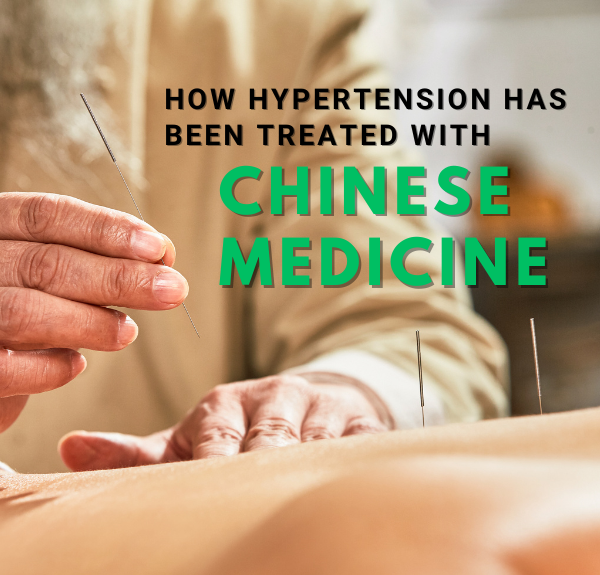
Acupuncture is one of the most widely recognized TCM therapies for supporting cardiovascular health. By stimulating specific acupuncture points, treatment may help regulate the autonomic nervous system, promote relaxation, improve circulation, and reduce the body's stress response. While acupuncture should not replace prescribed medications when they are needed, many patients find it to be a valuable complement to conventional care.
Chinese herbal medicine also plays an important role when prescribed by a qualified practitioner. Herbal formulas are selected according to the individual's specific pattern rather than simply treating the diagnosis of hypertension. This personalized approach reflects one of the core principles of Traditional Chinese Medicine — treat the person, not just the condition.
Lifestyle: The Foundation
Lifestyle habits remain the foundation of both Eastern and Western approaches to cardiovascular health. Regular physical activity, maintaining a healthy body weight, eating a diet rich in whole foods, obtaining adequate sleep, reducing chronic stress, and limiting tobacco and excessive alcohol use all contribute to healthier blood pressure. Mind-body practices such as Tai Chi, Qigong, meditation, and deep breathing further support relaxation and healthy circulation.
The Best of Both Worlds
At our clinic, we believe the most effective approach often combines the best of both worlds. Modern diagnostic testing helps identify cardiovascular risk factors, while Traditional Chinese Medicine seeks to restore balance throughout the body. Together, these approaches provide a comprehensive strategy for supporting long-term heart health.
If you have been diagnosed with high blood pressure, continue taking your prescribed medications unless advised otherwise by your physician. Integrating acupuncture, personalized herbal medicine, healthy nutrition, regular movement, and stress reduction may help support your cardiovascular system and improve your overall quality of life.
High blood pressure doesn't develop overnight — and restoring balance is a journey. By addressing the root causes and supporting your body's natural healing abilities, you can take meaningful steps toward a healthier heart and a healthier future.